

A butterfly valve is a type of quarter-turn control valve featuring a simple structure, primarily used for on-off or throttling control of media in low-pressure piping systems. Its closure member-commonly referred to as the disc or butterfly plate-is circular and rotates about a central shaft to achieve opening, closing, or flow regulation. Butterfly valves are suitable for controlling a wide range of fluids, including air, water, steam, corrosive media, slurries, oils, liquid metals, and radioactive substances. In pipeline systems, they primarily serve isolation and flow-regulating functions. The disc, mounted within the valve body, rotates around its own axis to fulfill these operational purposes.
1. Operating Principle
The butterfly valve utilizes a disc-shaped closure member that rotates approximately 90° to open, close, or modulate fluid flow. Over the past decade, it has become one of the fastest-growing valve types due to its simple construction, compact size, light weight, low material consumption, small installation footprint, low operating torque, ease of operation, rapid actuation, and excellent flow control and sealing performance.
2. Structural Components
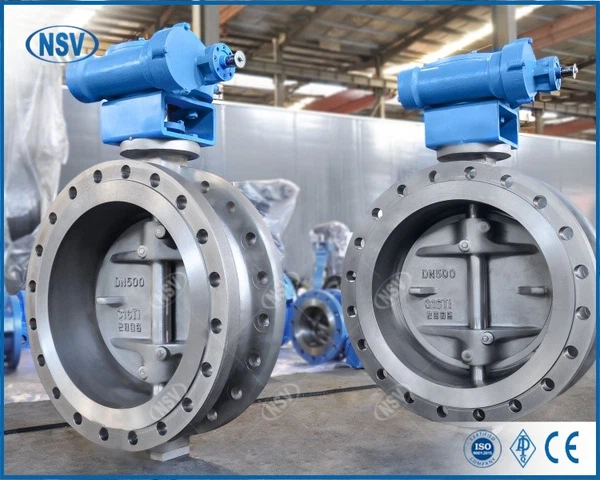
A butterfly valve primarily consists of the following components:
Valve body: Typically cylindrical with a short face-to-face dimension, housing the internal disc.
Stem (shaft): Transmits torque from the actuator or handwheel to the disc.
Disc (butterfly plate): The flow-controlling element that rotates within the body.
Seat (sealing ring): Provides the sealing surface against which the disc seals when closed.
3. Advantages
Excellent Flow Control Characteristics
 When fully open, the only resistance to flow is the thickness of the disc, resulting in minimal pressure drop across the valve. Combined with its short structural length, low overall height, and fast operation, the butterfly valve offers superior flow modulation capabilities.
Widely Used in Large-Diameter Throttling Applications
Between approximately 15° and 70° of disc rotation, the valve provides sensitive and precise flow control, making it especially prevalent in large-bore throttling services.
Compact, Lightweight, and Cost-Effective
Utilizing a thin metal disc as the flow control element minimizes space requirements while maintaining sufficient strength. Its compact design suits installations in confined spaces. For large-diameter pipelines, butterfly valves consume significantly less material than alternatives like ball valves, resulting in lower manufacturing costs.
Rapid and Efficient Sealing
The valve achieves quick shut-off and reliable sealing, making it well-suited for high-precision flow control applications.
Low Pressure Drop and High Pressure Recovery
Despite the disc remaining in the flow stream, the pressure loss is minimal. This low ΔP reduces pumping energy demands, and the streamlined design enables rapid pressure recovery downstream.
Low Maintenance Requirements
With fewer internal parts and no cavities or pockets where media or debris can accumulate, butterfly valves require less maintenance. Installation is straightforward-typically by bolting between adjacent pipe flanges without welding.
Simple Operation
Due to its lightweight and compact design, the valve requires low torque for actuation. The thin disc encounters minimal fluid friction, enabling smooth operation with minimal force.
Ease of Automation
Small actuators provide sufficient torque for operation, reducing both capital and operational costs. These compact actuators consume less power and add minimal expense to the valve assembly.
4. Disadvantages
Unsuitable for High-Pressure Throttling
 Butterfly valves are generally limited to low-pressure throttling applications, with effective control typically restricted to disc openings between 30° and 80°.
Susceptible to Cavitation and Choked Flow
In the open position, the disc partially obstructs the flow path, promoting turbulence and increasing the risk of cavitation. Additionally, particulates may accumulate around the disc, exacerbating wear and erosion.
Relatively Lower Corrosion Resistance
Compared to gate or ball valves, butterfly valves exhibit lower corrosion resistance. Continuous fluid impingement can degrade the disc over time, compromising sealing integrity-especially in viscous or abrasive services.
Incompatible with Pigging Operations
Even when fully open, the disc protrudes into the pipeline bore, obstructing pipeline cleaning pigs and rendering pigging impossible in lines containing butterfly valves.
5. Installation Guidelines
Installation & Maintenance
During installation, ensure the disc is in the fully closed position.
The open position must be determined based on the specified disc rotation angle.
For butterfly valves equipped with a bypass valve, open the bypass valve before actuating the main valve.
Always follow the manufacturer's installation instructions. For heavy-duty valves, provide a robust support foundation.
Construction & Installation Best Practices
 Verify that the installation location, elevation, and flow direction comply with engineering design specifications, and ensure all connections are secure and leak-tight.
On insulated pipelines, manual valve handles must not point downward.
Conduct a visual inspection prior to installation. The valve nameplate must conform to current standards.
For valves with a rated pressure exceeding 1.0 MPa or those serving as isolation valves on main pipelines,perform
hydrostatic strength and leakage tests before commissioning:
Strength test: 1.5× rated pressure for ≥5 minutes; no leakage from body or packing is acceptable.
Seal test: 1.1× rated pressure for the duration specified by relevant standards; zero leakage at the disc-seat interface is required for acceptance.


